![[comra]](https://substackcdn.com/image/fetch/$s_!JzSg!,w_120,h_120,c_fill,f_webp,q_auto:good,fl_progressive:steep/https%3A%2F%2Fsubstack-post-media.s3.amazonaws.com%2Fpublic%2Fimages%2Fde8ecdb5-026d-4a99-93b7-a80dde018c7b_1080x1080.png)
[ INTERVIEW ] Inside the Collapse of US Hegemony in West Asia
[comra] sat down with legal historian Dr. Nina Farnia to discuss the US-Israeli war on Iran and what it reveals about the shifting balance of global power.

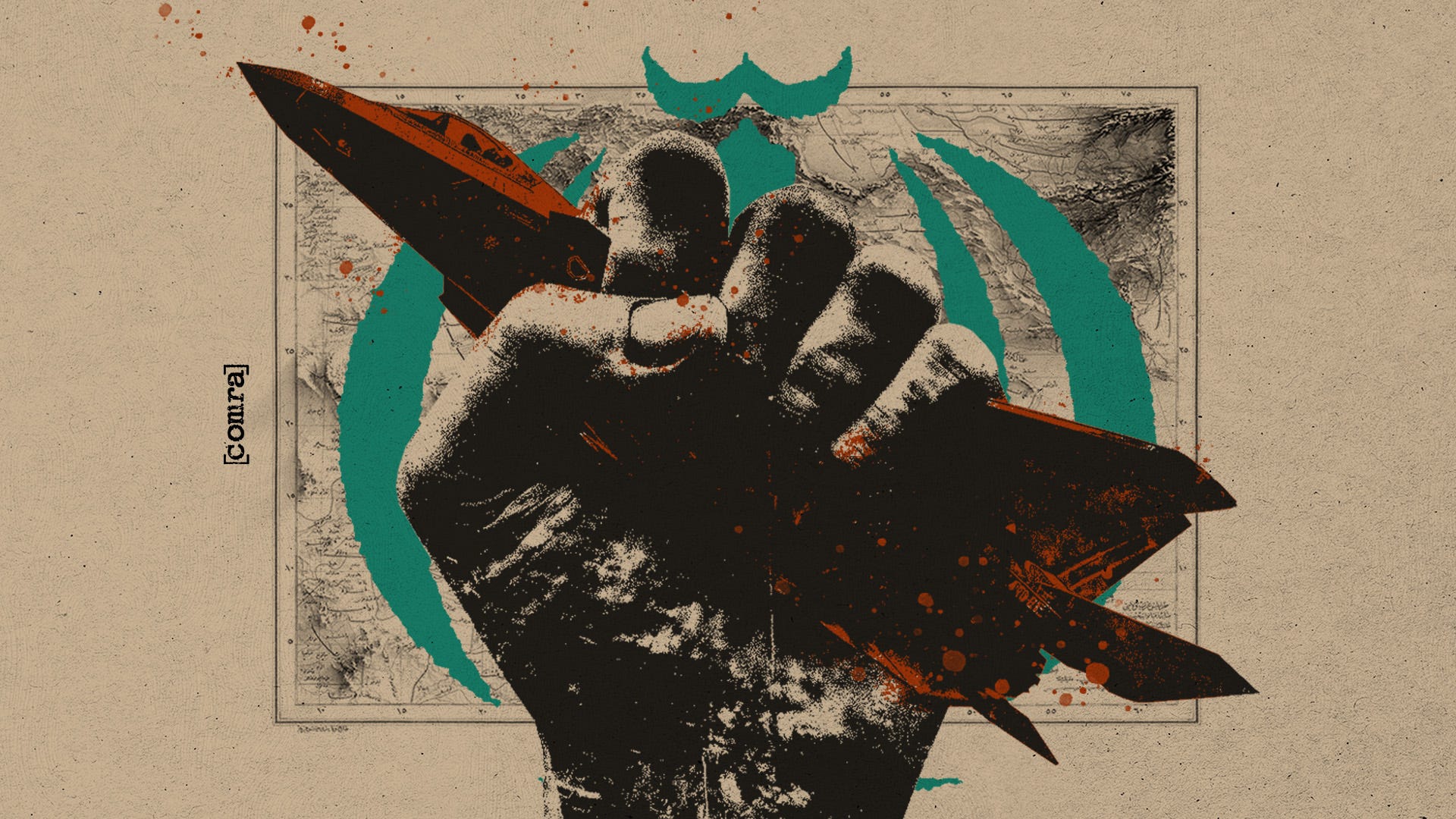
The war on Iran is not a regional conflict—it is the frontline of a global reckoning. As US and Israeli strikes pound Iranian cities, the so-called rules-based international order is crumbling in real time. From the Strait of Hormuz to the fracturing NATO alliance, the question is no longer whether US hegemony can hold, but what rises in its place.
Yet to understand what is unfolding, it is not enough to follow missile trajectories or oil futures. You have to grasp the deeper forces at work: decades of sanctions, sabotage, and siege that forged a nation’s capacity to resist—and an anti-imperialist axis now openly challenging the foundations of Western Empire. To make sense of this moment, [comra] sat down with legal historian Dr. Nina Farnia.
“This is a [US-Israeli] war to regain control of the planet—for Empire to regain control of the planet,” Farnia said.
A law professor at Albany Law School and member of the Anti-Imperialist Scholars Collective, Farnia has spent her career exposing how US imperial power shapes both domestic law and global politics. A former community organizer in Chicago and the author of the forthcoming Imperialism and Resistance (Stanford University Press), Farnia brings both scholarly rigor and lived proximity to the forces she studies.
In this interview, she discusses the collapse of the rules-based order, Iran’s path to self-reliance under siege, the realities of the “Axis of Resistance,” and why the current war is about far more than the US conquest for oil.
[comra]: We’re now witnessing the second act in a post-Al-Aqsa Flood world. How does the war on Iran expose the collapse of the so-called rules-based international order?
Nina Farnia: So first off, it's important to remember that immediately after the Palestinian resistance launched Al-Aqsa Flood, they actually said themselves that that Al-Aqsa Flood is not the final battle in the war of liberation, that Al-Aqsa Flood was going to lay the groundwork in the region for the war of liberation and bring the Palestinian question back to the center of the international and anti-imperialist left, and to disrupt ongoing normalization processes between Gulf states.
It accomplished all of that. And now it’s increasingly possible with every passing day that what we are seeing is that war of liberation, being waged by Iran and the forces in Lebanon, including Hezbollah, but other forces in the region as well, like in Iraq, and then Yemen, and also the Palestinians.
The rules-based order was never created to advance human liberation from the clutches of capital and Empire. It was created to gain consent for a status quo—for an equilibrium—after the devastation of the World Wars. And so there was a sector of the ruling class, of which Franklin D. Roosevelt (FDR) and many American leaders were a part, that believed that these wars of accumulation, while beneficial to Empire, are not sustainable over the long term for Empire—that there has to be a balance between “perceived peacetime” and “wartime.”
So the rules-based order created a legal and international political architecture that maintained a status quo and an equilibrium that would always support the interests of capitalist imperialism. That could swing toward moments of aggressive warfare. It could also swing toward moments where you use other instruments of power and domination, like soft power. That’s the rules-based order, which includes the international legal system, international law, the United Nations mechanism, etc.
A lot of people say that the live-streamed genocide of the Palestinians exposed that rules-based order for what it is. The fact is that the rules-based order was exposed long ago. And certainly, the Palestinian genocide was horrific because it was live-streamed, and we weren't able to stop it. But the rules-based order was never what people said it was.
So now we’re in a moment—after the Russia-NATO war broke out in Ukraine, and then Al-Aqsa Flood, and now this war—where a lot of countries are saying, “Look, we’re not against ‘international norms of peace,’ but there is not going to be peace without justice.” So there are now peoples and nations in the world that are saying, “We are going to use our power and our strength to enforce justice and peace for our peoples.” And that's what Iran is saying.
Iran is saying, “We want peace, but a peace where the US is causing urban warfare in our streets, bombing us periodically, assassinating our scientists, denying critical medicines, infrastructure, and food because of sanctions—that is not peace for us. We want real, honest-to-goodness peace. And that only happens through justice.”
So the world is in a highly dangerous but interesting moment where the contradictions are heightening, and the rules-based order is being challenged in a very real way.
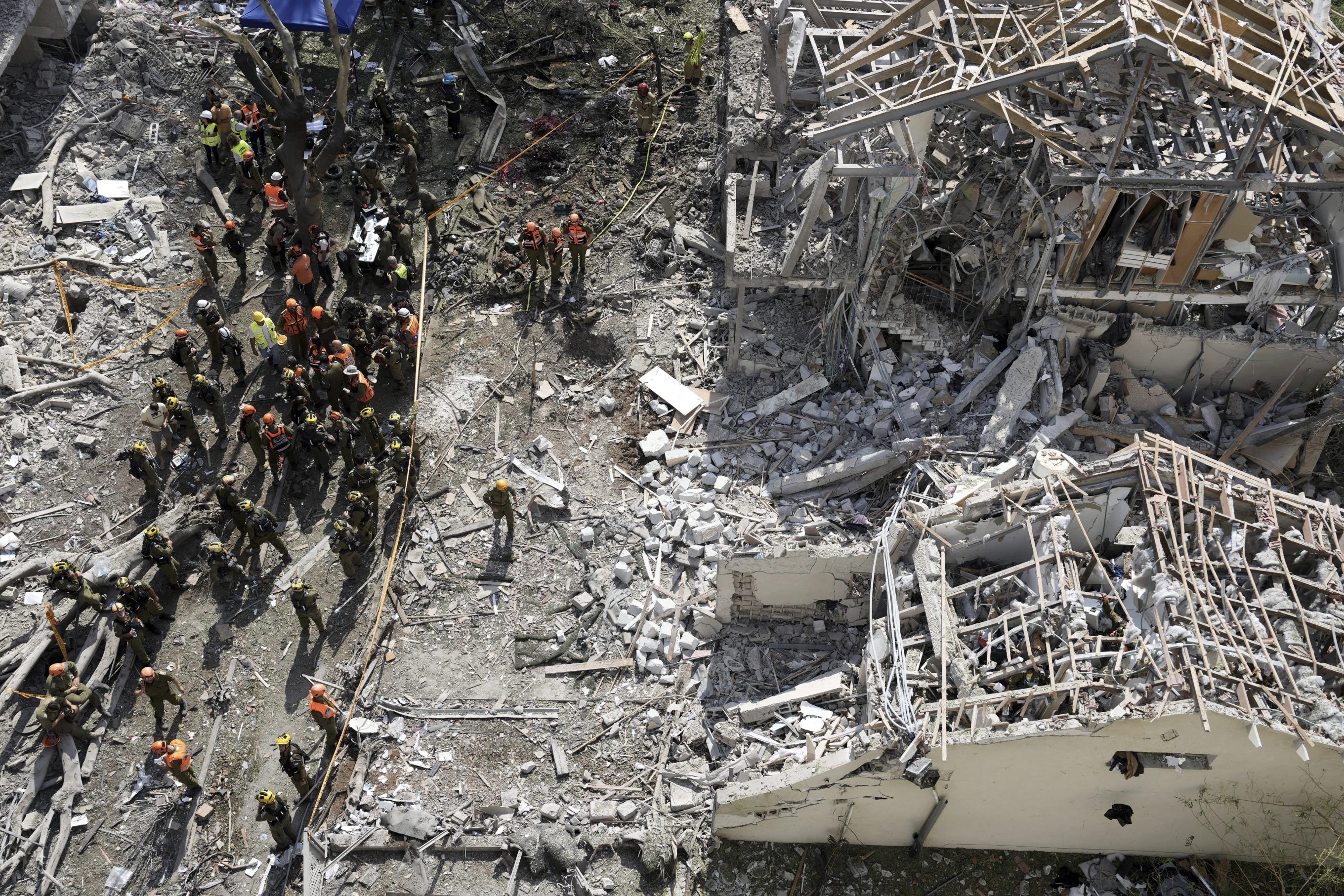
[comra]: Some analysts push the narrative that this is a war for oil or extraction. Is this really a war for oil — or is something bigger at play?
Nina Farnia: First off, yes, oil is a factor; the geographical location of West Asia at the juncture of multiple continents and waterways, including the Strait of Hormuz, etc., is an important factor. But Iran has proven that it is not only an independent nation willing to act independently out of the orbit of US imperialism, but that it now has the military capabilities and the self-reliance to do so—to support its people and also challenge attempts at its domination. And it also supports the Palestinian resistance and has a line item in its national budget mandating support for the Palestinian resistance, irrespective of political factions.
So this war is much bigger than just a war for oil. It is a war for domination of the planet. And the question of China is a part of this. Because China is now slowly getting more and more encircled by the US and by US war between the Pacific Command in its seas, and then the Ukraine War, and then the US-sponsored Israeli genocide, and then now the war in Iran, and also the war in Sudan. It’s important to remember that China is, I think, the ultimate goal here. This is much, much more than a war for oil at this point. This is a war to regain control of the planet—for Empire to regain control of the planet.
[comra]: Why has Iranian national identity proven so resilient after decades of sanctions, hybrid war, and military intervention?
Nina Farnia: Iran has been through decades and decades of indirect colonialism and assaults on its sovereignty. And the Iranian people have had multiple iterations of revolution and victory and attempts at total liberation.
There’s also great pride among Iranians in the history of the culture. There's great pride in the civilizational history, the thousand-year-old history of Iran. Iranians like to talk about the fact that Iran is one of the oldest, if not the oldest, continuous nations in the world. And then there’s also pride in the Islamic dimension of that identity and the merger of the Islamic dimension with the civilizational dimension, which is kind of what we’re really seeing unfold now.
There’s just a historical and political depth to the national identity that is difficult to disrupt, especially for a society that is still waging a live-streamed genocide and a society that, frankly, is quite young. I mean, the United States as a settler empire is relatively young when it comes to nations like Iran or China, etc.
So the Iranians are quite clear that they may have political disagreements with things that happen inside their country, as all healthy societies do. If there are no political disagreements, then you know that you’re dealing with an unhealthy society. But those disagreements are political disagreements, and by and large, the Iranians are not against the Islamic Republic.
The rallies that we’re seeing right now in the streets every night—they are holding the streets as bombs are falling, and you can hear air defenses going, but they’re holding the streets because they don’t want that urban warfare campaign to come back. That’s the popular cradle. That’s the nation that has come together to defend the state. And that, I think, we’re going to see more and more of as the US Empire becomes more aggressive during its decisive fall.
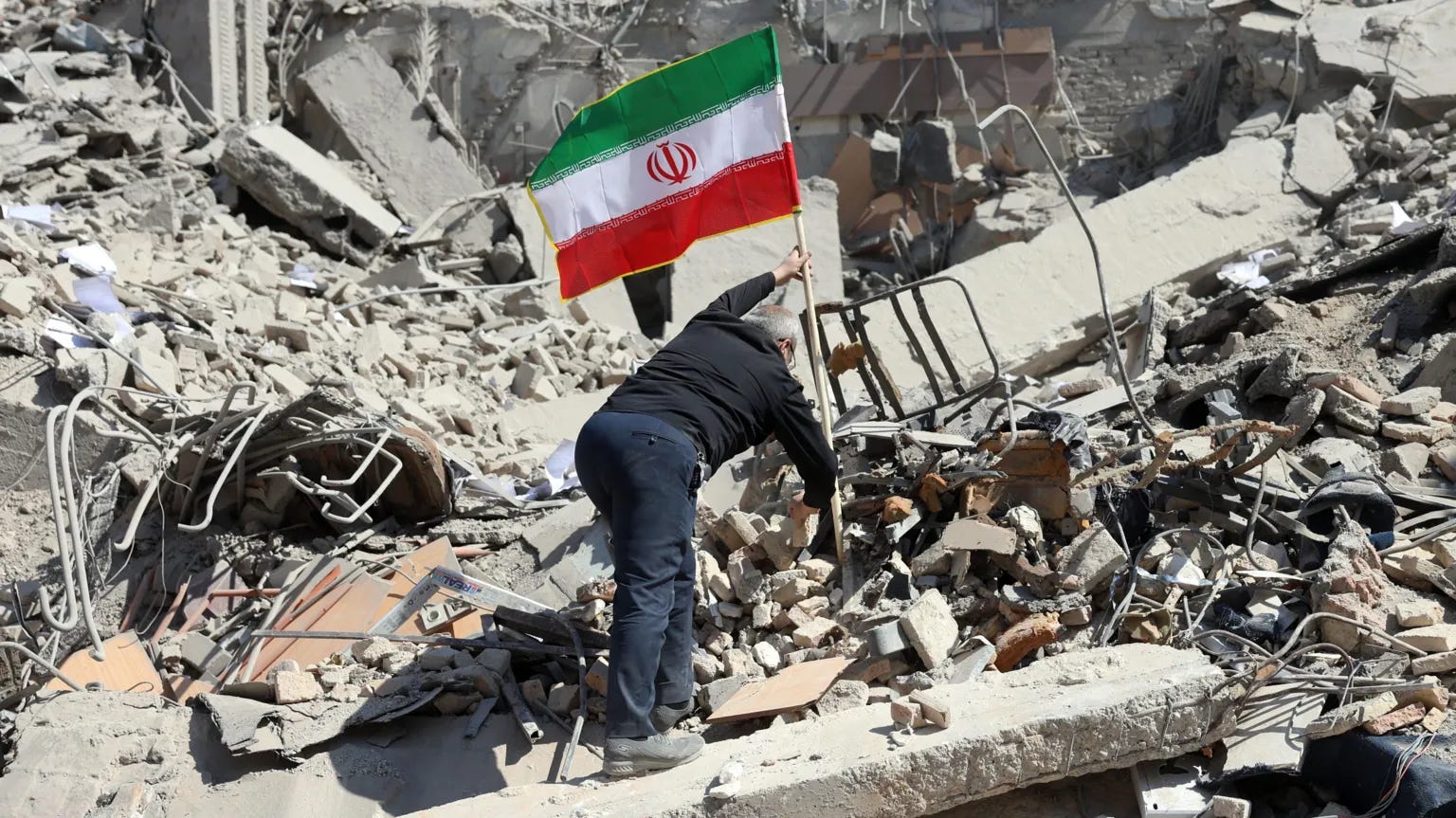
[comra]: What does Iran and the axis of resistance tell us about the future of struggles for self-determination in the Global South and in Palestine, which remains under active colonial rule?
Nina Farnia: I think the greatest lesson is that even a state (the Islamic Republic) that’s less than 50 years old and that has faced first the US-sponsored Iraqi invasion of Iran—that was a devastating war—and then a whole round of sanctions and blockades that were very serious—the theft of its assets, the assassination of its scientists, etc.—could, in the midst of all this, create self-reliance.
It increased the literacy rate of the population. It educated the population to the point that now over 90% are literate, both women and the population in general. It’s almost food sovereign. I think it’s 80% food sovereign. And that’s an extraordinary figure in light of its dependencies before the revolution.
And it learned through the Iran-Iraq War and its isolation during that war that it also needs to be able to defend itself, that it cannot rely on other actors or great powers to defend it when it’s in trouble. And that’s why it invested so much in its educational system.
So I think the greatest lesson here is not just that one needs to be self-reliant—which is an important lesson—but that it's actually possible for a besieged nation in the Global South to become self-reliant by mobilizing both the nation and the state, together.
[comra]: How has the war in Syria and the ongoing aggression against Hezbollah affected the military capacity of the axis of resistance?
Nina Farnia: It’s evident from Hezbollah’s activity right now that Hezbollah was not defeated or eliminated. In fact, I think the Israelis themselves, in their news shows, are saying that Hezbollah has come out in some ways stronger than before. So I think that's evident, which means that the supply routes that everyone thought were lost earlier may not have been totally lost.
And in fact, I saw Iranian colleagues actually say that, despite how horrible the Syrian regime currently is, that people in Syria can be bribed now. So it’s quite easy to maintain supply lines. That is horrible for Syria and for the question of Syrian sovereignty and the Arab national project.
But if the Axis of Resistance can be victorious in defeating US imperialism in the region, the Syrian question will also be resolved. So anybody who's truly interested in the liberation of Syria from Al-Qaeda and these vile forces should fundamentally take the anti-imperialist position.
[comra]: With 20% of the world’s oil passing through the Strait of Hormuz, what does Iran’s naval blockade tell us about the shifting balance of global power?
Nina Farnia: I think a story came out in the Financial Times today that this is the biggest oil crisis in history. And I think what we’re witnessing is really serious, and the US and the forces of imperialism should take it seriously.
On the one hand, we have the factor of Iranian self-reliance, which I described earlier. On the other hand, we have the additional factor that the world moves away from the unipolar order that was created after the fall of the Soviet Union toward a more balanced order. With the rise of China, opportunities and space are opening up—especially in the Eastern Hemisphere—for the nationalization of resources and taking back control of one’s land and waterways.
And the Alliance of Sahel States is an excellent example. The Alliance of Sahel States in Africa has done so much in just mere months in terms of regaining control of their land and resources—that is, through alliances with Russia, China, and Iran.
So the balance of power is shifting quite dramatically. And there’s an economic architecture underlying that shift. There’s a military architecture underlying that shift, and there’s a political architecture or ideological architecture underlying that shift. That is extraordinary, especially for the Eastern Hemisphere.
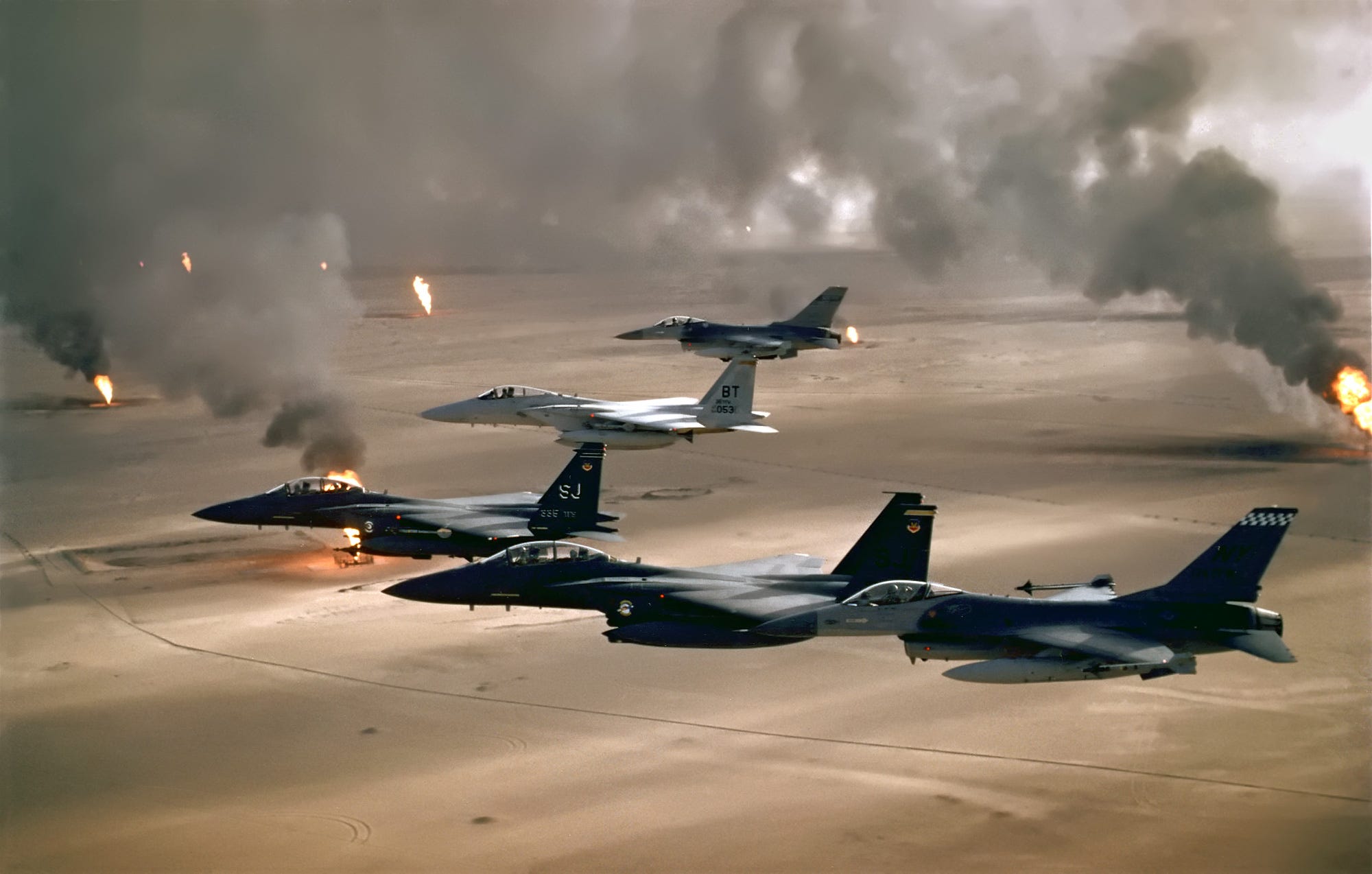
[comra]: The IRGC said any country that expels the US and Israeli ambassadors can pass freely through the Strait — and Spain just removed its Israeli ambassador. What are the consequences for Western hegemony?
Nina Farnia: So one thing that’s important to remember is that nation-states—especially nation-states that are in the orbit of capitalist imperialism and bourgeois democracy—are opportunistic. And if they have concerns that their continuity or their status is challenged, they might make new plans.
What we’re seeing in terms of the fractures within Europe and between basically the North Atlantic alliance (Canada, Europe, and the US) is a reflection of that opportunism. It’s not because the Europeans all of a sudden see the light or want the liberation of all the people that they devastated and colonized for 500 to 1000 years. I think that’s an important factor.
The other important factor that I think nothing makes more clear than US Secretary of State Marco Rubio’s speech in Munich a few weeks ago is the civilizational alliance rooted in white supremacy that creates the ideological basis for the North Atlantic project. Marco Rubio really tried to remind everybody in that room that—despite the fact that Foreign Minister Wang Yi of China was the keynote—he was the real show in that room, because white solidarity among North America and Europe is what saved the world, and it’s what will continue to save the world. This is just out-and-out white supremacist rhetoric. He said as much. And even though he’s Cuban, he situated himself through Spain as a white man.
There are going to be lots of shifts like this occurring in the world right now, where fractures are going to emerge within the elite, fractures are going to emerge between places like the Gulf states and the US and the imperialist forces. I think the anti-imperialist forces are probably going to try to benefit from or exploit those fractures. And that exploitation process is not for the purpose of advancing capitalism. It’s for the purpose of making a better world, for decolonizing the world, or for removing imperialism from the planet.
[comra]: You’ve described Israel not as a US proxy, but as a US military base. How does Zionism drive ethnic conflict and state destruction in Iran and the wider region?
Nina Farnia: In my written work and in my interviews, I have historically called Israel a proxy of US imperialism. And it is. I mean, Israel is not controlling the United States. Israel is a proxy of first European and now US imperialism.
But I’ve come to the conclusion that in order to be a proxy, one has to have some dimension of stability or self-reliance—like Honduras in the Contra War—has to have some semblance of legitimacy as a nation-state that Israel does not have. And if you do a political-economic analysis of Israel, what you will see is that it receives all of its resources, support, and funding from the United States and Europe. It could not exist. That project could not exist if it were not for Euro-American imperialism and the North Atlantic project.
So what it boils down to is that it’s a settler colony located in our region with a bunch of settlers who are incredibly violent and incredibly racist. And they enact their violence and their racism on Palestinians and Lebanese, especially on a daily basis, and also on Ethiopian who are being excluded from the shelters as we speak.
And through its military architecture, which is the basis of its economy, it’s basically trying to destroy the whole region to recolonize and take over the whole region. And it even helps colonial projects and imperial projects in other parts of the world, like the Contra War against the Nicaraguan revolution. So that’s why I’ve thought about problematizing the term proxy when it comes to Israel.
In terms of the “Syrianization” question, I think it’s possible that that’s what’s happening to Iran. But I think it’s also possible that Iran could become Yugoslavia, which was disappeared from the planet. I think if the imperialists had their way, they would disappear Iran altogether. And I think the decimation and elimination of Yugoslavia, I think, is an option that we should always remember. Even if it’s a remote option for the imperialists, we should never forget that they’re actually capable of that. They’re actually capable of removing a nation-state from the planet, not hundreds of years ago or thousands of years ago, but less than half a century ago.
So it could be “Syrianization.” Though I don’t like the term “Syrianization” because Syria is not the first that that’s happened to, but it could be that informal partitioning. It could be a formal balkanization, or it could be something way more extreme. We don’t know.
 | A guest post by
|